


When selecting personnel lifts for industrial applications, understanding the differences between scissor lifts and mast lifts helps you match equipment to your specific workflow. While both lift types move workers more safely to elevated work areas, their designs have different strengths.
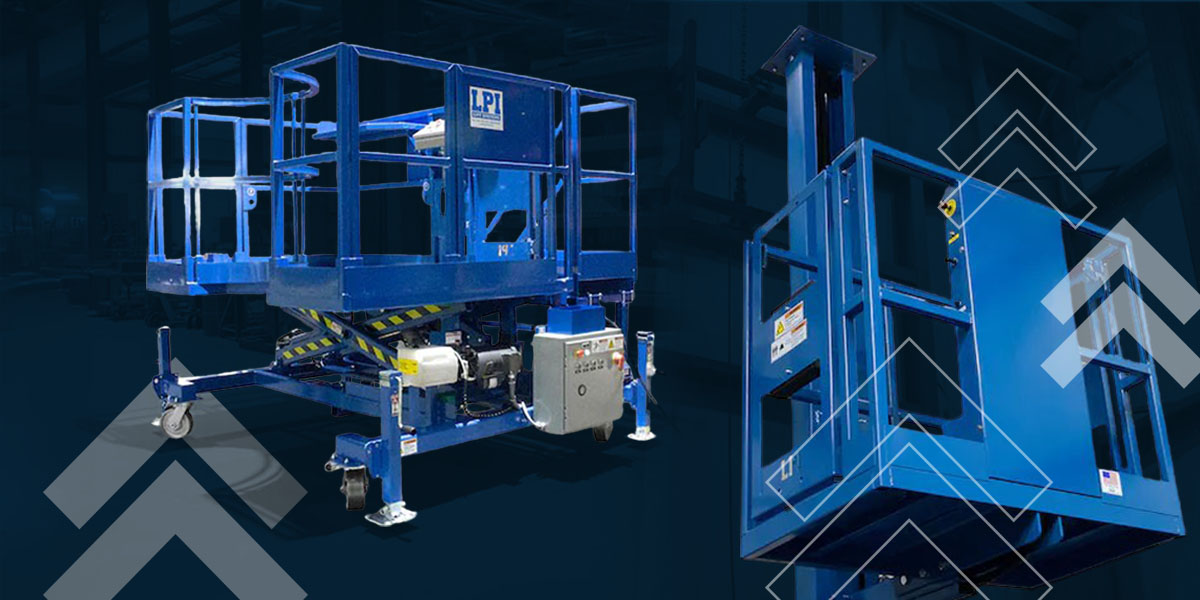
Scissor lifts use a crisscrossing mechanism to raise platforms vertically, offering larger work surfaces and stable positioning. Mast lifts rely on a vertical column system that can incorporate multiple axes of movement for enhanced reach. The right choice depends on your application, available floor space and how workers need to access equipment or products while working at heights.
Scissor Lift vs. Mast Lift Key Features
The differences in lifting mechanisms and designs between scissor lifts and mast lifts create distinct advantages for different industrial applications.
Operational Footprint
Scissor lifts typically feature a larger platform and a heavier chassis than mast lifts. This design provides workers with more room to maneuver and position tools while working at heights, making scissor lifts well-suited for applications where workers spend extended periods at elevation. The larger base also provides a stable work surface, minimizing platform movement during tasks such as welding or grinding. However, the increased footprint can limit maneuverability in facilities with tight aisle configurations or densely packed equipment layouts.
In contrast, mast lifts use a more compact base design, reducing their floor space requirements. This smaller footprint enables mast lifts to navigate confined areas and operate in facilities where maximizing production floor space is critical.
Vertical and Horizontal Outreach
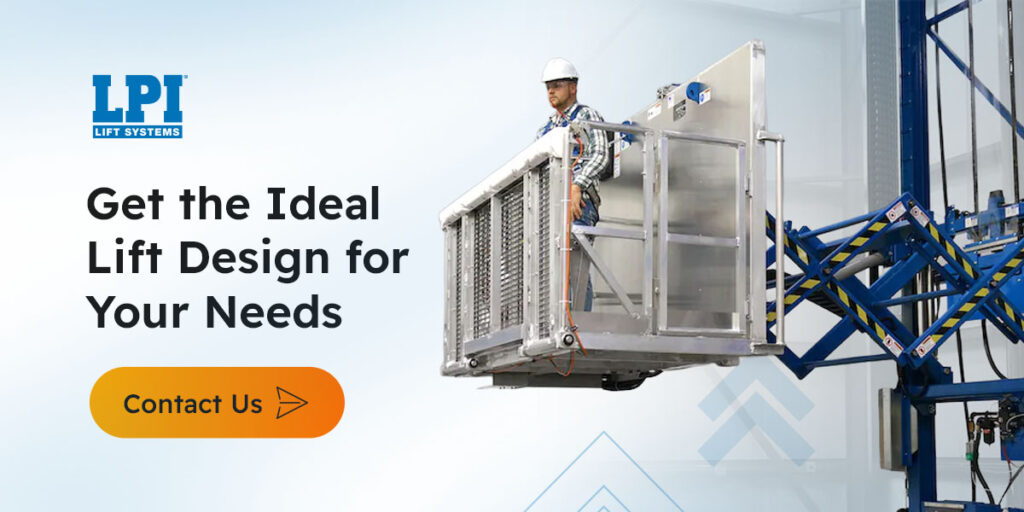
Scissor lifts primarily offer vertical movement. Many scissor lift configurations can also include extendable platform sides that create additional horizontal access. These extensions allow workers to reach areas beyond the base footprint without repositioning the entire lift, improving efficiency during tasks such as surface preparation or equipment inspections.
Certain mast lift designs offer three axes of movement: vertical travel, horizontal reach and lateral positioning. This multi-directional access is valuable in applications where workers need to maneuver around complex equipment geometries or access multiple surfaces without frequent lift repositioning.
Platform Capacity
The differences in platform design between scissor and mast lifts directly impact how workers perform their tasks. Scissor lifts generally provide more platform space. They accommodate workers and the tools and materials needed for extended work periods at height. This spacious design benefits applications where multiple workers need simultaneous access or where tasks require numerous tools and equipment at an elevated position.
Mast lifts typically feature smaller lift platforms designed for single operators and essential tools. This compact platform design enhances maneuverability and reduces the overall footprint. Mast lifts are practical for applications where space constraints outweigh the need for larger work surfaces.
Operator Experience
A lift’s platform significantly affects worker productivity and safety while working at heights. Scissor lifts feature open, spacious platforms that offer freedom of movement during elevated tasks. Workers can move along the length of the equipment they’re servicing without constantly adjusting the lift position.
The generous platform reduces operator fatigue and improves workflow efficiency during processes like painting or product assembly. The space also allows workers to maintain ergonomic positioning while performing tasks, reducing the physical strain associated with reaching or awkward postures.
Mast lifts, with their generally smaller platforms, may require more frequent positioning adjustments to access different work areas. While this aspect adds additional repositioning steps, the compact design and precise controls of mast lifts enable workers to position themselves very close to work surfaces when necessary.
Ideal Applications for Scissor Lifts
Scissor lifts excel in applications where workers need stable positioning, generous platform space and extended time at elevated heights.
- Painting and coating: The spacious platform accommodates spray guns, coating materials and air hoses while giving workers room to move freely, reducing the need to reposition the lift repeatedly.
- Welding and grinding: The stable base minimizes vibration and platform movement during precision welding, while the open workspace provides room for welding equipment.
- Surface preparation: Workers can bring sanding equipment, cleaning supplies and surface treatment materials to the elevated work area and maintain ergonomic positioning throughout extended prep work sessions.
- Product assembly and installation: Multiple people can share the platform during collaborative assembly tasks, with enough space for fastening tools, components and assembly jigs.
- Equipment inspections and maintenance: The stable platform enables workers to conduct thorough visual inspections and perform maintenance procedures at heights.
- Vertical farming or inventory access: The secure, spacious platform allows workers to handle plants, packaging or inventory items more safely while accessing high-rack storage systems.
- Fall protection and worker safety: The guardrails and stable platform design provide secure elevated access, eliminating the risks associated with ladders or scaffolding.
- Washdown and clean rooms: Rail-guided scissor lifts can be configured with narrow bases to fit tight aisles while still providing platform space for cleaning equipment and proper cleaning techniques in controlled environments.
Ideal Applications of Mast Lifts
Mast lifts serve production and maintenance operations across diverse industrial applications, where their compact design and multi-axis positioning offer advantages.
- Inspections: The precise positioning and compact footprint enable detailed inspection work in confined areas.
- Paint and blast booths: The smaller base design maximizes usable booth space while providing workers access to all surfaces requiring coating or abrasive treatment.
- Welding and grinding: Workers can position themselves at the exact angle needed for high-quality welds or grinding work in tight spaces.
- Maintenance and repair tasks: Workers can navigate between closely spaced equipment in dense facility layouts and position themselves precisely at access points for repairs.
- Assembly and installation: Mast lifts are ideal for the space constraints or equipment geometries that make larger scissor lifts impractical.
- Inventory access from high-rack systems: The narrow profile fits warehouse aisles designed for material handling equipment. Workers can reach elevated storage positions for order picking or inventory management
- Fall protection and worker safety: Mast lifts provide safer access alternatives to ladders in space-constrained environments.
- Wash down and clean rooms: The reduced floor contact area and compact design minimize contamination concerns while fitting into sanitary spaces with limited room for equipment.
Choosing the Right Lift for Your Application
Scissor and mast lifts often serve similar applications. Both lift types can support painting, welding, grinding, maintenance and other elevated work processes. This overlap exists because industrial work encompasses a great variety of job types and lift designs that address different operational needs.
For example, one painting operation may require a large platform accommodating multiple workers and extensive equipment, making a scissor lift the preferred choice. Another painting application may need a more maneuverable platform for a single worker navigating tight spaces, where a mast lift provides better functionality.
Beyond the lifting mechanism itself, lift designs vary in platform size, lift height and reach requirements and available platform amenities. Custom lift designs add even more features, from specialized controls to platform configurations.