


The U.S. electrical grid is expanding at a pace not seen in decades. Transformer prices have surged 60% to 80% since early 2020, and lead times for large power transformers now stretch between two and four years.
For plants manufacturing transformers, switchgear and power distribution hardware, your order book may already reflect this reality. The critical question is whether your facility can scale production safely and efficiently to meet demand without adding proportional labor costs or increasing safety risk.
3 Forces Driving an Unprecedented Demand Surge
The grid buildout manufacturing demand you see filling your order books stems from three distinct but overlapping infrastructure shifts. Each represents a multiyear investment cycle. Together, they create sustained pressure on production capacity across the power equipment sector.
1. Unprecedented Data Center and AI Expansion
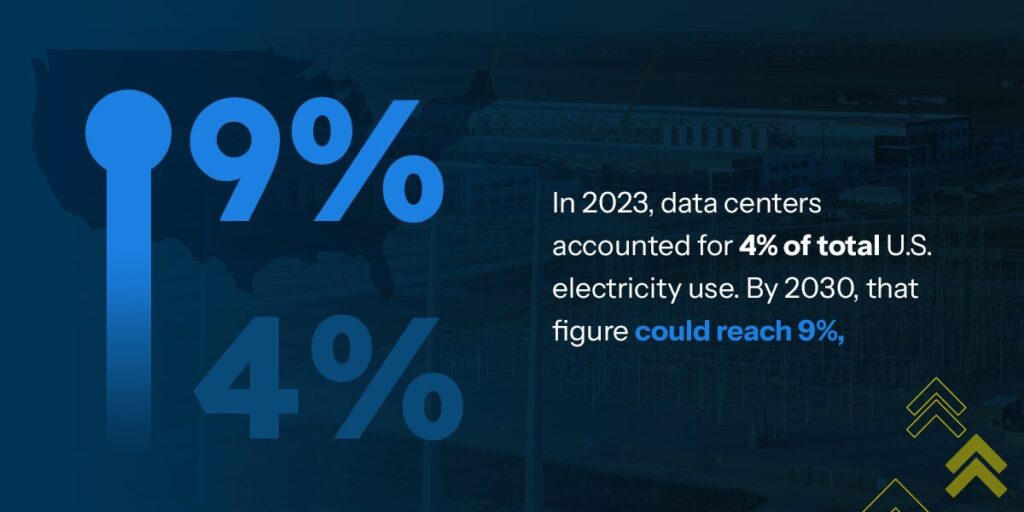
Data centers are consuming electricity at an accelerating rate. In 2023, they accounted for 4% of total U.S. electricity use. By 2030, that figure could reach 9%, according to research from the Electric Power Research Institute. This increase in consumption requires massive investment in new power distribution hardware.
The growth trajectory is even steeper than those percentages reveal. The same report shows that U.S. data centers consumed approximately 176 terawatt-hours in 2023. Projections indicate consumption reaching between 325 and 580 terawatt-hours by 2028. That represents a potential tripling in just five years. Every new data center and every AI training facility requires transformers, switchgear and backup power systems. The hardware demand is immediate and substantial.
Overall, U.S. electricity demand could grow 15% to 20% in the next decade. AI workloads are a primary driver, since each new AI training facility or hyperscale data center requires its own substation-level infrastructure. The hardware must be manufactured, tested and delivered on accelerated timelines.
2. Nationwide EV Infrastructure Investment
The federal government is investing heavily in a coast-to-coast charging network. The Bipartisan Infrastructure Law established the National Electric Vehicle Infrastructure program, committing $5 billion over five years to the deployment of publicly accessible chargers. This funding is accelerating large-scale, real-world projects.
For instance, the Department of Energy closed a $1.25 billion loan to EVgo to build approximately 7,500 public fast chargers nationwide. The rapid, federally funded deployment of thousands of high-draw DC fast chargers places immense demand on the grid’s distribution layer. Each station requires its own connection to the grid.
This explosive growth creates a significant need for new or upgraded hardware, specifically the pad-mount transformers and switchgear required to step down voltage and safely manage power at thousands of new sites.
3. Long-Overdue Grid Modernization
The U.S. electrical grid is aging. Approximately 55% of distribution transformers are more than 33 years old and are approaching the end of their expected service life, according to the U.S. Department of Energy. These units can fail at any time. The same report notes the industry is currently unable to meet transformer demand. Replacement alone would create a sustained backlog of orders. Combined with new buildout, the production challenge is significant.
The New Operational Realities
The macro-level demand surge is clear. What matters now is how it translates into day-to-day operational pressure at the plant level. Electrical equipment production scaling goes beyond accepting larger orders. It demands fundamental changes to how your facility operates. Three specific challenges are emerging across electrical equipment manufacturing facilities.
Throughput, Lead Times and Order Books
Order books are filling fast, creating immediate pressure to scale output. Plants face a fundamental challenge of producing more units while keeping per-unit labor hours in check. This reality is reshaping transformer manufacturer capacity planning across the industry. Facilities must deliver higher volume while maintaining quality standards and managing costs.
The constraint often appears at the workflow level. For example, switchgear manufacturing throughput depends heavily on how efficiently technicians can access and work on each unit. When a technician spends 15 minutes per unit repositioning equipment or climbing to reach connection points, that time compounds rapidly. Across 200 units per month, those 15 minutes add up to 50 hours of nonproductive time.
The stakes are higher because power equipment manufacturing lead times are already stretched to multiyear timelines. Simply adding more workers helps, but it also increases coordination overhead and cost. The real gains come from eliminating bottlenecks and reducing unnecessary movement on the floor.
The Skilled Labor Productivity Gap
The manufacturing labor market has fundamentally shifted. According to the National Association of Manufacturers, up to 1.9 million of 3.8 million new manufacturing jobs could go unfilled in the next decade, and 65% of manufacturers cite attracting and retaining talent as their primary business challenge. This reality means expanding your workforce to match order volume is increasingly difficult, making electrical manufacturing workforce productivity a competitive differentiator rather than a performance metric.
The focus shifts to what each technician accomplishes per shift. How much time do they spend climbing ladders, moving scaffolding or working from awkward positions to reach connection points on large assemblies? Those activities consume hours but add zero value to the finished unit.
Improving electrical equipment plant efficiency now depends on redesigning how employees access their work, reducing the physical effort required to reach the task at hand, and creating conditions where skilled labor spends more time applying their expertise and less time navigating the limitations of the workspace.
The Critical Impact of Floor Safety
Production pressure often increases risk. In 2024, the average cost of a preventable workplace injury requiring medical consultation was $48,000, while the total cost of all work injuries reached $181.4 billion. Businesses lost 69 million workdays due to on-the-job injuries in the same year, according to the National Safety Council.
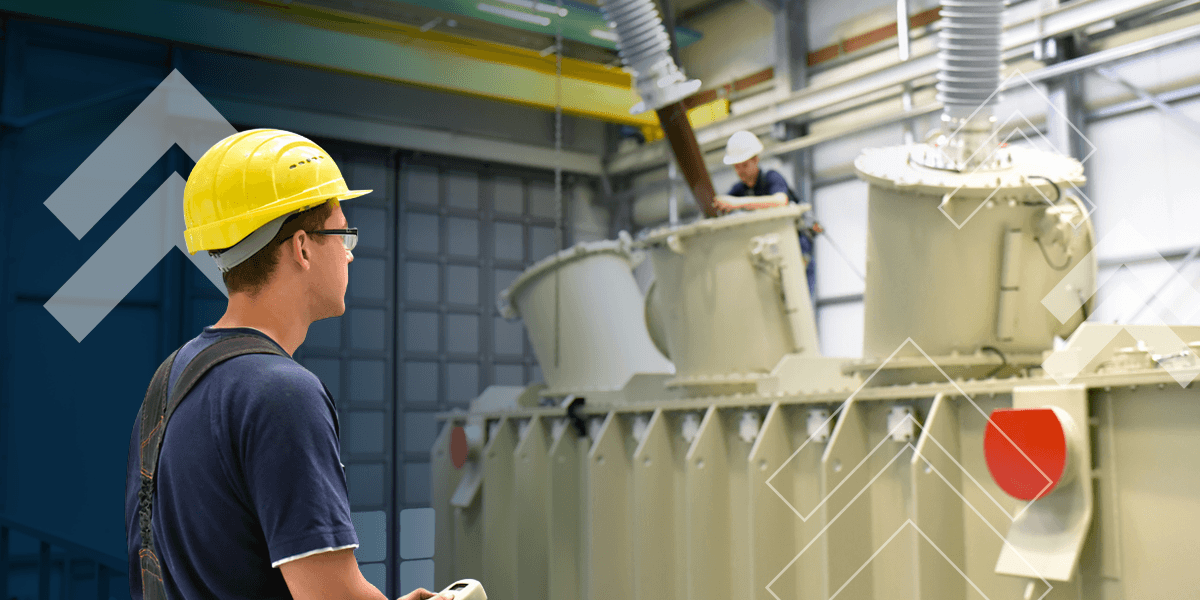
Electrical plant worker safety at height is particularly critical during the assembly of large transformers and switchgear. Safety incidents are expensive. They pull experienced workers off the line, increase insurance costs and slow production exactly when you need maximum throughput.
How Forward-Looking Plants Are Preparing
Strategic manufacturers are taking proactive steps now, before order books are full. Three specific priorities are emerging across the sector:
- Workflow and layout audits: Workflow and layout reviews identify bottlenecks before they become critical. Forward-looking manufacturers are analyzing production lines to understand where technicians spend time and where delays occur. These audits identify non-value-added motion, pinpoint access challenges and reveal opportunities to reduce cycle times.
- Ergonomics as a throughput lever: Forward-thinking manufacturers view worker access and positioning as a production variable, not just a safety checkbox. When operators can work at comfortable heights with tools within easy reach, they complete tasks faster and with less fatigue. Ergonomic improvements translate to measurable efficiency gains.
- Purpose-built equipment investments: Manufacturers are shifting from generic platforms to solutions tailored to specific tasks. This shift includes investing in custom solutions that reduce repositioning time and bring tooling directly and safely to the workpiece. Leading plants are evaluating whether their current equipment investments match the production volume and complexity they now face.
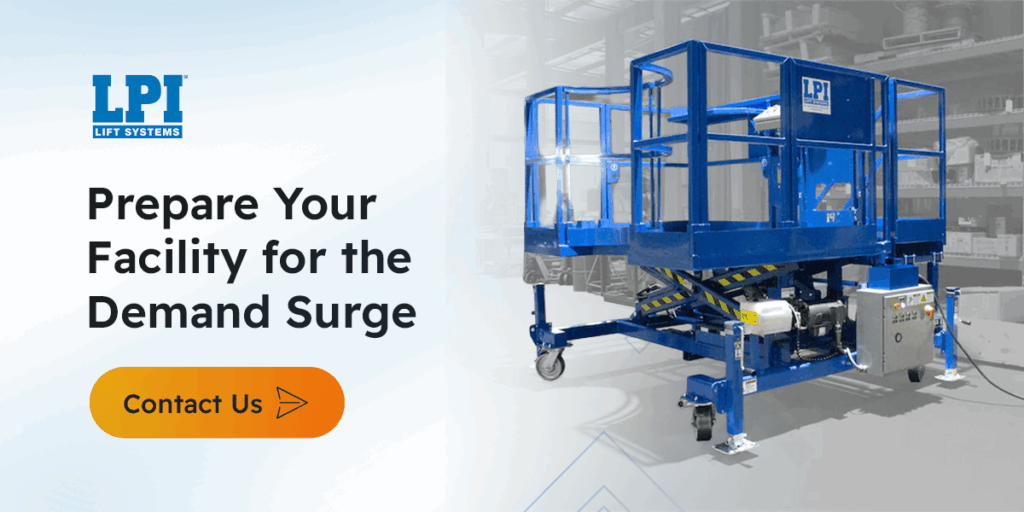
Prepare Your Facility for the Demand Surge
Demand for transformers, switchgear and power distribution equipment will continue for years to come. Data centers, EV infrastructure and grid replacement projects are driving orders that will fill production schedules well into the next decade. Every plant’s specific needs will differ, but the shared challenge is clear. You must scale production safely and efficiently without proportionally increasing labor costs.
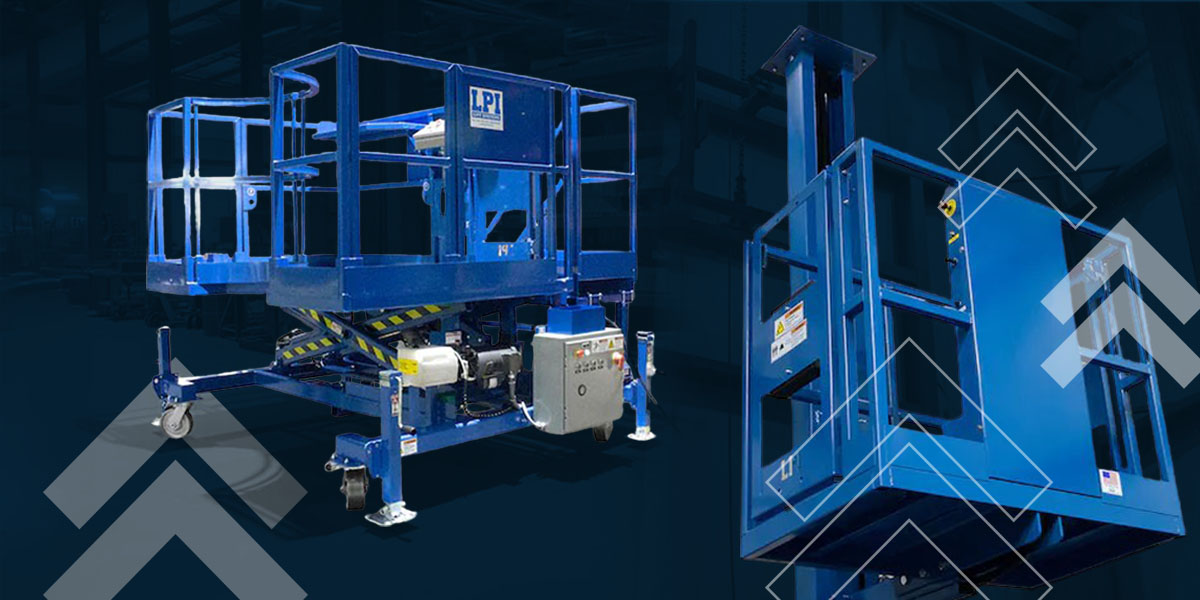
The time to evaluate workflows, safety protocols and equipment is now. LPI Lift Systems builds industrial access lifts for manufacturing environments where precision assembly, large-scale equipment and worker safety are critical. Contact us to explore tailored access solutions for your production needs.