


The power grid is expanding. Transformer manufacturers face unprecedented demand as utilities modernize infrastructure and data centers multiply across the country. According to studies, U.S. electricity demand is projected to grow by approximately 15% to 20% over the next decade. Delivery lead times for large transformers are now around two and four years, placing direct pressure on manufacturers to increase throughput. This growth creates opportunities, but also intensifies a persistent challenge in providing safe, efficient access during assembly and finishing.
Fabricating a large power transformer requires workers to access the unit repeatedly throughout assembly and finishing. Traditional access methods like ladders and scaffolding address height, but they introduce inefficiencies and safety concerns that affect productivity and worker well-being. Engineered access systems offer a more effective approach.
Why Large Power Transformers Are Difficult to Access
Large power transformers can stand over 20ft tall and span considerable width and depth. The physical size alone creates access challenges, but the complexity goes deeper. These units feature intricate geometries with irregular surfaces and protruding components that require worker attention at various stages of production.
- Structural assembly: Workers need proper access platforms to build the core framework and position heavy components that form the transformer foundation.
- Electrical component installation: Technicians need easy access to mount bushings, tap changers and other critical hardware at varying heights across the unit.
- Wiring and connections: Precision work demands close access to terminal points throughout the transformer for proper electrical integration.
- Welding procedures: Fabricators require stable, close access to joints and seams across a transformer’s structure to perform precise, code-compliant welds at varying heights and positions.
- Surface preparation: Workers must treat every exterior surface before finishing, requiring comprehensive access to all sides.
- Painting and coating: Consistent coverage across all exposed areas depends on workers reaching every surface.
- Final inspection and testing: Close examination of all surfaces, connection points and electrical components requires positioning at multiple elevations and angles to verify the unit meets specifications.
Workers spend hours moving around these units throughout their shifts. A technician might access the top surface to complete wiring connections, then descend to work on lower components, then reposition to reach a different side of the transformer. Each relocation takes time. Each elevation change requires climbing. The repetitive movement between access points accumulates over a production shift, affecting the pace of work and the physical demands on personnel.
The Hidden Costs of Traditional Access Methods
Ladders and scaffolding remain common in transformer manufacturing facilities, but these traditional tools carry major operational and safety costs.
Lost Production Time
Every ladder reposition and scaffolding modification requires halting production. The worker descends, moves the ladder, re-secures it, climbs and reorients before resuming work. Scaffolding requires erection, inspection and teardown at each stage. In typical heavy industrial projects, scaffolding can account for 30% to 40% of direct man-hours.
Ergonomic and Safety Concerns
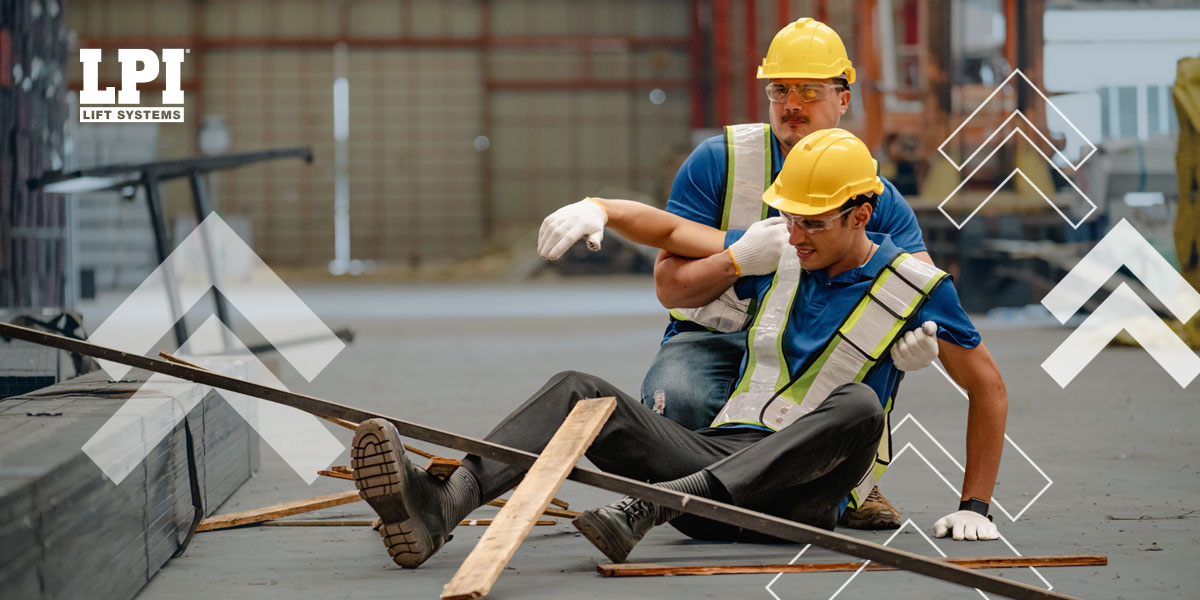
A worker on a ladder must keep one hand on it at all times. Holding on eliminates two-handed precision work like wiring terminations, torquing fasteners and component installation. Additionally, reaching beyond the stable zone while working on a ladder or scaffold may force overhead reach, torso twist and constrained static positions. These awkward postures are primary risk factors for musculoskeletal disorders. Beyond safety, awkward postures increase errors, accelerate fatigue and slow task completion across the shift.
Compliance and Financial Exposure
Fall incidents remain a persistent compliance challenge in manufacturing environments. Among the most-cited violations for fiscal year 2025, as per the Occupational Safety and Health Administration (OSHA), fall protection ranked first, ladders ranked third and scaffolding ranked sixth. The financial cost is substantial. According to the Liberty Mutual Workplace Safety Index for manufacturing, falls to a lower level cost U.S. employers $1.27 billion in 2025.
Enforcement actions for repeat violations can result in significant financial penalties. In 2025, a transformer manufacturing company in Pocatello, Idaho, was fined $986,888 for repeat violations, including fall hazards and failure to provide appropriate personal protective equipment. The fine marked Idaho’s largest OSHA penalty in at least 25 years.
Injuries from falls or ergonomic strain affect the entire operation. They pull supervisors off the floor, trigger incident reporting, halt production for investigation and create scheduling gaps when experienced workers are out.
Workflow Interruptions
Scaffolding structures remain fixed while production stages change. When the product moves or the task shifts, the scaffolding must be modified or dismantled. While scaffolding is up, it can block adjacent areas, restrict equipment movement and interfere with material flow around the same assembly. Moreover, workers and equipment on adjacent tasks must reroute, creating coordination overhead.
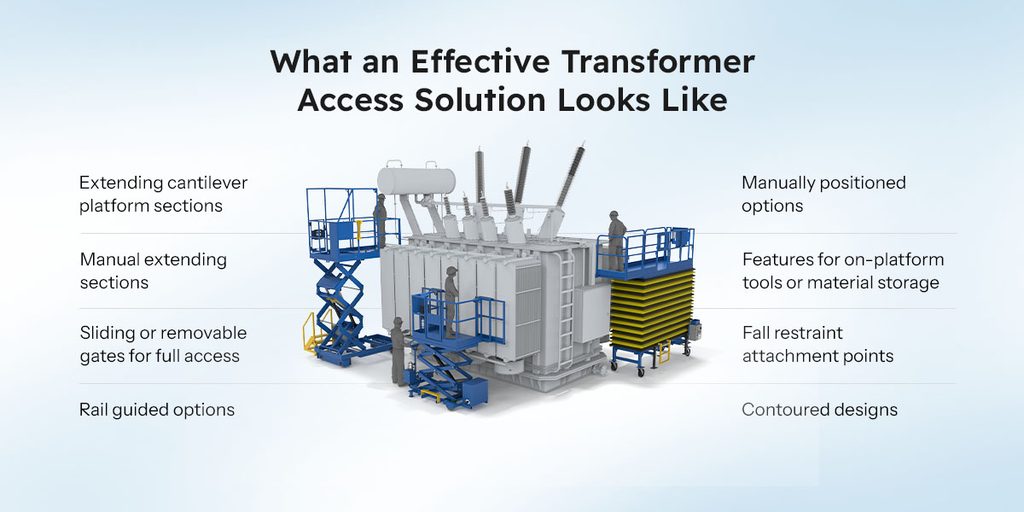
What an Effective Transformer Access Solution Looks Like
Access equipment for transformer manufacturing should meet specific requirements that support safety and productivity.
Adjustable Working Height
Adjustable height capability allows personnel to raise or lower their work surface to match the area requiring attention. This flexibility reduces overhead reaching and eliminates the need to work from uncomfortable positions. When personnel can bring the platform to the right height, they spend less energy maintaining balance and focus more on the work at hand.
Extended Horizontal Reach
Large transformers require access across their width, length and depth. Equipment with horizontal reach capability reduces the need to reposition around the perimeter, keeping workers on the platform longer and reducing the time lost to climbing down, relocating and climbing back up.
Custom platform features extend this capability further.
- Rollouts and slides allow workers to extend their reach laterally without moving the base unit.
- Cantilevered platforms provide overhang access to areas beneath components or along recessed surfaces.
- Extensions add working area where the transformer’s geometry demands it.
- Rotating safety gates allow workers to transition smoothly between platform levels or adjacent structures without sacrificing fall protection.
These capabilities are particularly valuable during surface preparation and finishing operations, where continuous coverage is essential to quality and compliance.
Stable Work Platform
A stable platform provides space for the worker, their tools and necessary materials without the need for improvised balancing on ladders. Workers handling electrical components or paint equipment need a secure footing and space to maneuver. Stability improves both safety and task quality.
Adaptability
Transformer sizes and configurations often vary between production runs. Access equipment needs to accommodate different unit dimensions without requiring extensive reconfiguration. Systems that move to varying heights, widths and working positions provide flexibility across your production schedule. This adaptability extends to different manufacturing stages, where access requirements change as the transformer moves through assembly, finishing and inspection.
Ergonomic Positioning
Proper positioning reduces physical strain on workers. When access equipment allows personnel to work at comfortable heights and distances from their tasks, it minimizes awkward postures, repetitive reaching and sustained overhead work. Ergonomic access supports worker well-being while improving the quality and consistency of manufacturing tasks performed at elevated heights.
How LPI Lift Systems Supports Transformer Manufacturing Operations
With over 45 years of experience, LPI Lift Systems designs and fabricates personnel access systems built for specific manufacturing processes.
- Custom-engineered solutions: Transformer manufacturing facilities vary in layout, ceiling height, floor space and production sequence. Custom-engineered lifts address individual facility constraints and workflow requirements that standard equipment cannot accommodate.
- Rail-guided work platforms: These systems provide continuous travel along the transformer’s length. They are ideal for linear workflows where workers perform winding, conductor installation and inspection tasks that progress sequentially from one end of the unit to the other.
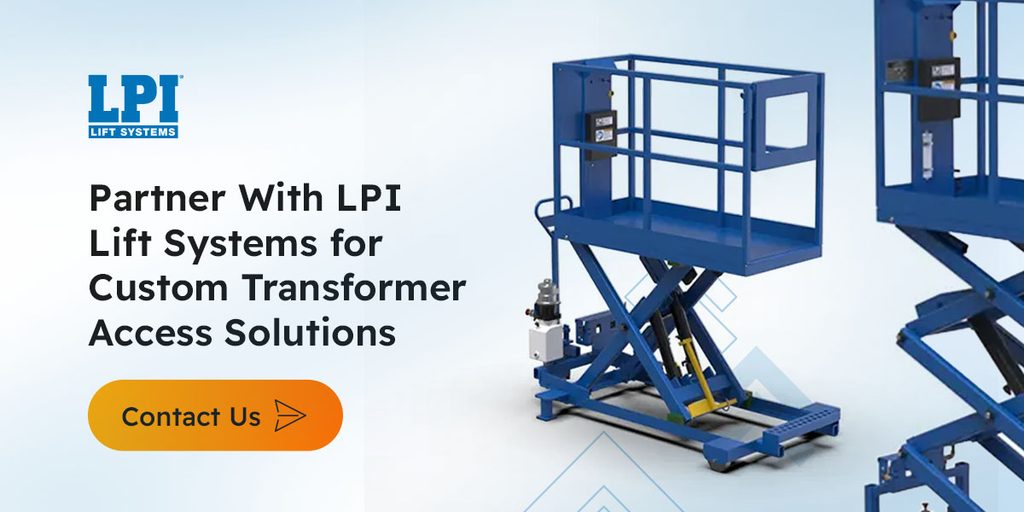
- Scissor lift platforms: Scissor lifts offer vertical positioning with the ability to reposition around the transformer’s perimeter. These platforms support surface preparation, wiring and painting tasks that require workers to access multiple sides of the unit during a single production stage.
- Fixed-height access systems: For repetitive processes performed at consistent elevations across multiple transformer units, fixed-height platforms eliminate adjustment time and provide stable positioning for standardized tasks.
- Pneumatic and electric-powered solutions: LPI offers both pneumatic-hydraulic and electric-hydraulic power systems. Pneumatic-hydraulic configurations are suitable for environments where spark prevention is necessary. Electric-hydraulic systems provide precise positioning control for detailed assembly and inspection work in nonhazardous areas.
All LPI products are 100% factory tested before delivery and made in the United States. Our traveling technicians provide on-site lift inspections, maintenance and repair to support OSHA and ANSI compliance frameworks that require regular equipment inspections. We offer both standard configurations and fully custom-engineered solutions, depending on facility requirements.
Partner With LPI Lift Systems for Custom Transformer Access Solutions
Engineered work platforms address the specific access challenges of large, complex equipment in ways portable ladders and temporary scaffolding cannot. The right access system, designed for the specific application, helps transformer manufacturers build more efficiently while reducing the risk of injuries and costly violations.
LPI designs and fabricates personnel access systems built to the height and reach requirements of large power transformer manufacturing. Contact us today to learn more about how we can support your operations.